Trip lens
Calmer Paris
Closer to the 3rd at 9am than the Eiffel shot at sunset: side streets, calmer corners, and Paris before the tour groups fully wake up.
Where to stay in Paris
By PickOneAlready
Last fact-checked March 2026
23 min read
Paris is less one city than a cluster of neighborhoods solving different trips. Get the arrondissement right and the hotel choice usually gets much easier.
The cleanest first answer
For most trips, start with Hotel Hana in the 2nd. If it is gone for your dates, The Hoxton Paris keeps the same central logic at a bigger, easier-to-book scale. Only jump to Cheval Blanc if the hotel itself is meant to carry the trip.
Trip lens
Closer to the 3rd at 9am than the Eiffel shot at sunset: side streets, calmer corners, and Paris before the tour groups fully wake up.
Trip lens
The daytime city you actually use: market streets, cafe corners, and the version of Paris between the hotel and dinner.
Trip lens
More like the 10th after dark: movement, traffic, light, and the version of the city that feels better after one more glass of wine.
Fast picks
If you already know the trip shape, you may not need the whole page. Start with the strongest all-around answer, then only go deeper if your budget, noise tolerance, or hotel style changes the recommendation.
This guide is built for travelers who are usually spending about EUR200-500 a night. If that is not your trip, tell us what changes and we will narrow the tradeoffs faster than the page can.
Start here
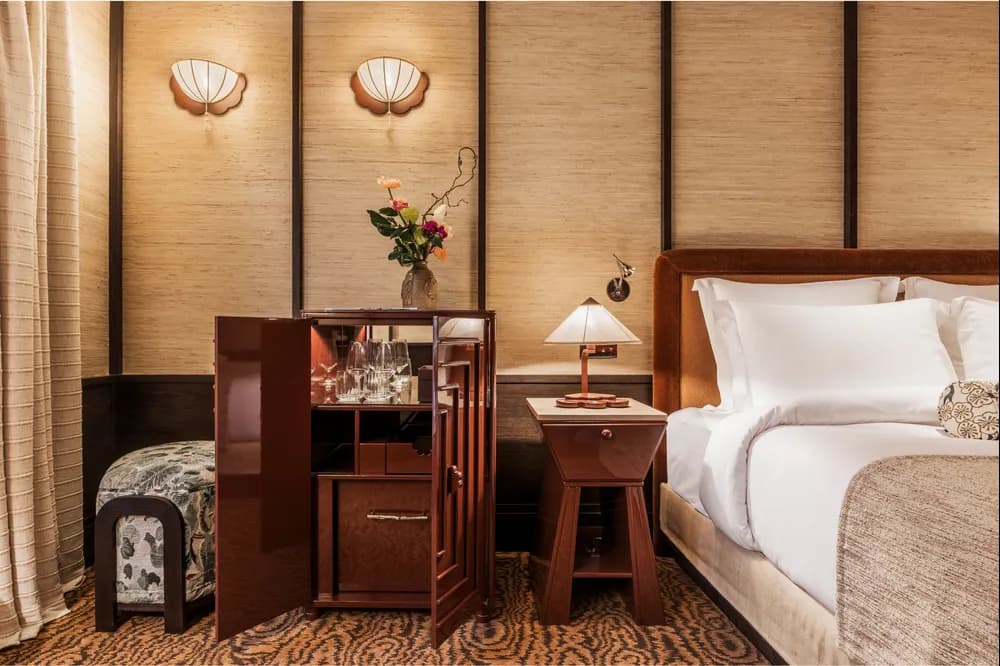
Start here2nd arrondissement (Bourse)
$$$ · EUR200-350 per night
The smartest center-of-gravity answer if you want Paris to stay easy without paying Marais or palace pricing.
Jump to hotel
Best dinner trip
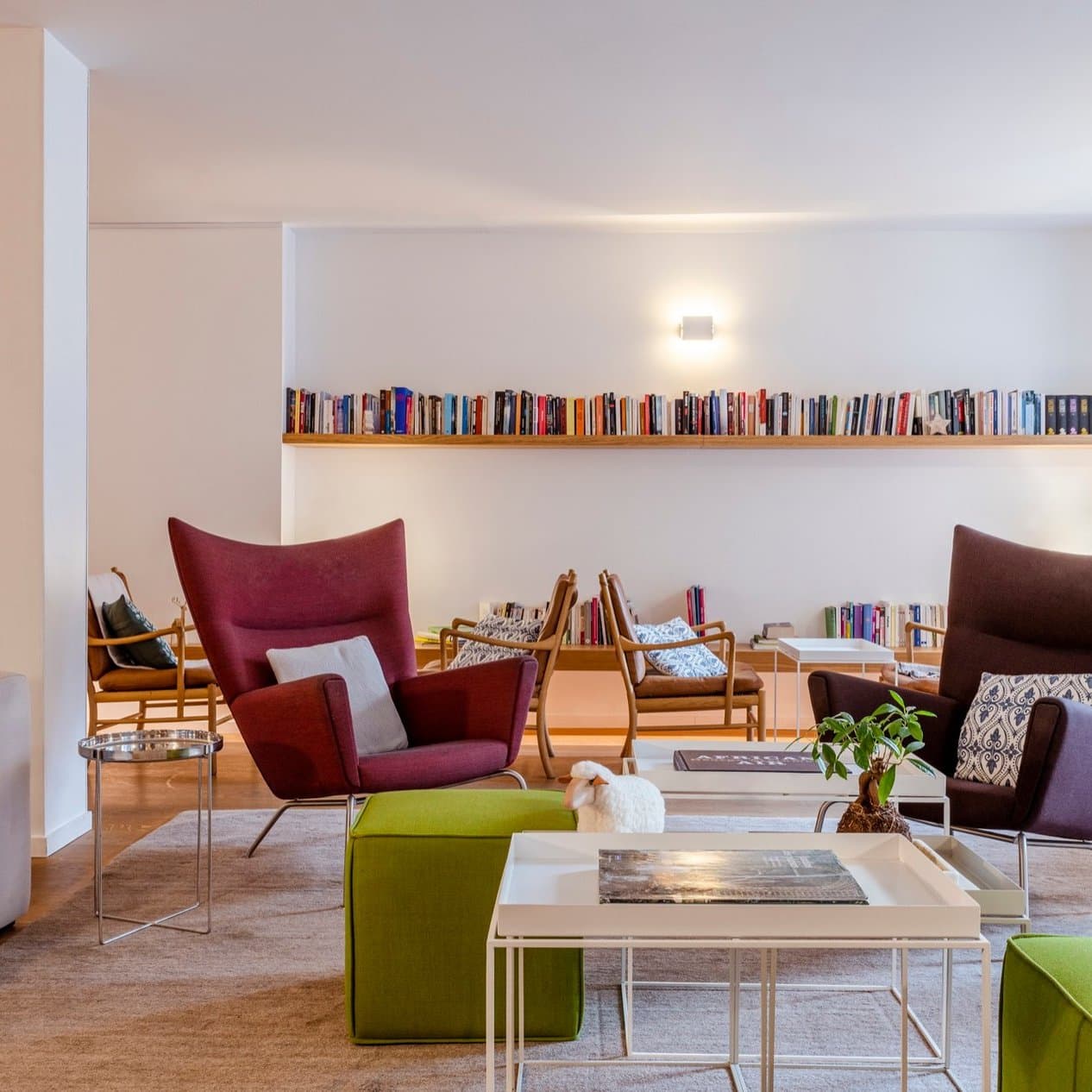
10th arrondissement (Canal Saint-Martin)
$$ · EUR150-250 per night
The right answer when the trip bends around Le Servan, Clamato, and the 10th/11th restaurant map.
Jump to hotel
Best luxury splurge
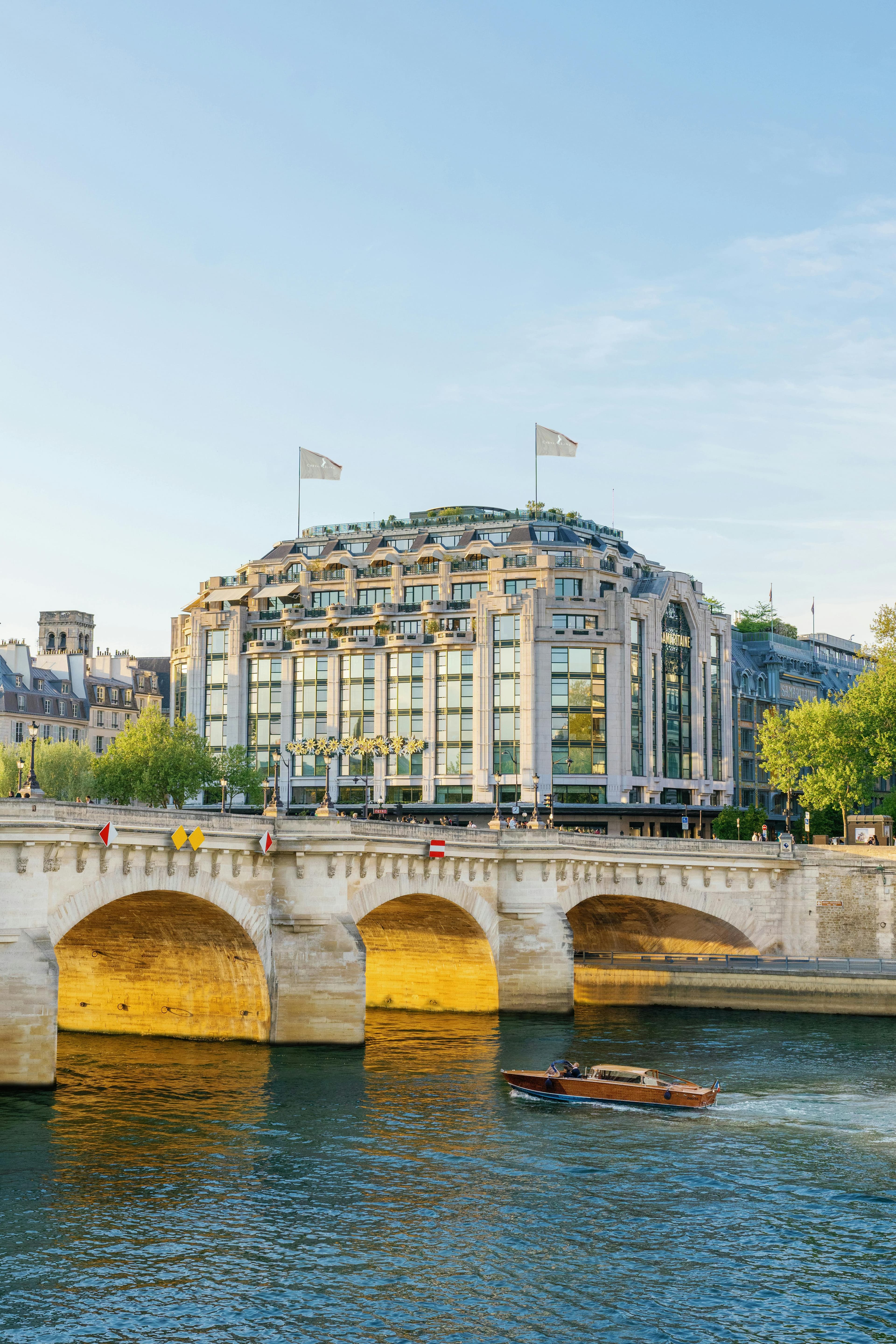
1st arrondissement
$$$$ · EUR800-1500 per night
Use this when the hotel itself needs to carry the trip and the budget is genuinely wide open.
Jump to hotel
If two of these still feel right for different reasons, skip ahead and tell us about the trip. That is where we are more useful than the page.
Neighborhood context
This is the part that usually changes the answer. Read it straight through if you are still sorting out the map, then use the hotel shortlist once the neighborhood logic feels clear.
City truth
Most bad Paris hotel choices are not really hotel mistakes. They are map mistakes. The right arrondissement changes what you eat, how far you walk after dinner, how much noise you tolerate, and whether the trip feels cinematic or annoying.
City truth
If the trip bends around Le Servan, Clamato, Cafe du Coin, and the newer neo-bistro cluster, the 10th, 11th, and 2nd matter more than the old first-timer instinct to sleep near monuments. Paris still photographs like a museum city, but it books like a food city.
City truth
A pretty address does not guarantee sleep here. Boulevard-facing rooms, busy Marais lanes, and late restaurant streets all carry noise tradeoffs. The useful move is to pick the right base and still ask for an interior room when noise tolerance is low.
How the city works
The useful move is not memorizing every pretty block. It is understanding the handful of areas that solve the trip differently enough to change the hotel recommendation.
How to read Paris
Most people do not need a map puzzle here. They need to know whether they want the easiest all-around base, the sharper food-first version, the quieter luxury pocket, or the obvious first-trip zone.
Design-aware first-timers who still want a central Paris answer.
Watch for: The 4th is louder and more tourist-saturated than many guides admit.
Food obsessives, repeat visitors, and couples who plan around dinner.
Watch for: Do not flatten the 11th into one uniform zone; Charonne and Saint-Maur work differently from Bastille.
First-timers who want fewer wrong turns and repeat visitors who want value without slumming it.
Watch for: It is central, not dramatic. That is the feature.
Luxury buyers who want the hotel itself to do part of the work.
Watch for: You are paying for hardware and address, not the easiest everyday restaurant map.
Travelers buying the image of Paris on purpose, and couples who want a calmer pace.
Watch for: These neighborhoods can be worth it, but only if readers understand they are paying for image, quiet, or luxury - not the best food map.
This is the clearest first-timer lesson: the 3rd feels sharper and calmer, while the 4th pays a tourism tax for beauty.
Gotcha: The 4th is louder and more tourist-saturated than many guides admit.
The food-first answer. Not the whole city, but the best way to explain how modern Paris eats.
Gotcha: Do not flatten the 11th into one uniform zone; Charonne and Saint-Maur work differently from Bastille.
The practical Right Bank answer: central, smart, walkable, and less performative than the Marais.
Gotcha: It is central, not dramatic. That is the feature.
This is not a neighborhood lifestyle recommendation so much as a luxury-base decision. Use it when the traveler is buying top-end hotel hardware first and city texture second.
Gotcha: You are paying for hardware and address, not the easiest everyday restaurant map.
These are the premium postcard and quiet-residential answers, respectively. Different moods, same need for honest tradeoff framing.
Gotcha: These neighborhoods can be worth it, but only if readers understand they are paying for image, quiet, or luxury - not the best food map.
For most readers, the right answer is Hotel Hana in the 2nd arrondissement. It is central without being performative, calm without feeling remote, and stylish without asking you to pay palace-hotel prices for the privilege of saying you did. If this is your first real Paris trip and you want the version that keeps museums, dinner, and basic city movement easy, that is the hotel to start with.
The luxury exception is Cheval Blanc Paris in the 1st. If money is no object and the hotel itself needs to carry the memory, book that instead. Plenitude gives you a three-star dinner without leaving the building, the Dior Spa comes with a 30-meter pool, and the whole property is built for the kind of trip where the hotel is not background noise. That is a different decision, and an easier one.
For everyone else, the real work starts before the hotel search opens. Paris behaves less like one city than a cluster of neighborhoods solving different versions of the same trip, and the wrong arrondissement does more than inconvenience you. It changes what you eat, how much noise you tolerate, how much time disappears in transit, and whether the whole thing feels cinematic or faintly irritating.
The mistakes are predictable. Someone books the 8th because it looks central, then spends the week eating generic food in a glossy corridor with palace-hotel pricing and chain-hotel energy. Someone books "the Marais" without realizing the calmer 3rd and the louder, tourist-saturated 4th are different products. Someone plans a food trip, sleeps in Saint-Germain, and turns every good dinner into a cross-town commute.
This page exists to stop that from happening.
If dinner reservations are driving the trip, 9Hotel Republique in the 10th makes more sense because it puts you inside the neo-bistro map instead of making you commute to it. Everything else below is really one argument: choose the neighborhood first, then the hotel practically chooses itself.
Paris has 20 arrondissements spiraling clockwise from the center. Most travelers need to understand about seven of them well and avoid three of them by default.
1st arrondissement: The Louvre, the Tuileries, La Samaritaine, Place Vendome. This is where luxury hotel hardware concentrates. It is useful if the hotel itself is the point and oddly quiet after dark because almost nobody actually lives a neighborhood life here.
2nd arrondissement: Bourse, Sentier, Montorgueil. The practical Right Bank answer. Central in a way that actually pays off, cheaper than the Marais, and far easier than it looks on a map.
3rd arrondissement: The calmer, sharper half of the Marais. Design shops, galleries, more breathing room, less crowd pressure.
4th arrondissement: The famous Marais. Place des Vosges, the Jewish Quarter, the prettier and louder version of the same idea.
6th arrondissement: Saint-Germain-des-Pres. Classic Left Bank. Beautiful, literary, expensive, and worth paying for only if you actively want the image.
7th arrondissement: Rue Cler, Invalides, Eiffel Tower adjacency. Genuinely residential. Quiet after 9pm. Either that is the feature or it is the problem.
10th and 11th arrondissements: Canal Saint-Martin, Republique, Oberkampf, Charonne. Where Paris eats now. The right answer when dinner matters more than postcard geography.
The default skips are the 8th, the 16th, and the northern 18th above Sacre-Coeur. The 8th looks central and lives like a commercial corridor. The 16th is peaceful but disconnected. The far-north 18th is harder to defend for first-timers than guides pretending otherwise.
One timing note before you lock anything: August and Fashion Week distort the same map in opposite directions. August empties the 10th and 11th because the neighborhood restaurants close for summer. Fashion Week, usually late February to early March and late September to early October, does the reverse: the city is fully open, but rates jump, boutique inventory disappears, and reservations get harder at exactly the moment you want Paris to feel easy. Early October, once the worst compression passes, is often the clean version of the food-first trip.
If the real agenda is the Louvre, Musee d'Orsay, Sainte-Chapelle, the Musee Picasso, and maybe a day at Versailles, you want a base that stays central to the museum cluster without dying after dark.
The 2nd arrondissement is usually the answer. The Louvre and Palais Royal are close, the center of the Right Bank stays useful, and you can still reach a serious dinner without turning the night into a transport plan. It is the best general-purpose base when the trip mixes museums by day and smarter dinners by night.
The 3rd works when you want a museum trip with more edge. The Musee Picasso is walkable. The calmer half of the Marais is easy to use between museum blocks. The important correction is that the Centre Pompidou closed in autumn 2025 for a major renovation and is not expected to reopen until 2030. Book the Marais for walkability, the Musee Picasso, and street life, not because you think Pompidou is waiting there as a rainy-day fallback.
Saint-Germain is the museum-heavy answer if you want the Left Bank version of Paris on purpose. Musee d'Orsay mornings, Jardin du Luxembourg afternoons, bookshops and galleries between stops, then a hotel with enough historical weight to make the image feel earned. That is where Mandarin Oriental Lutetia starts to make sense. The trade is equally simple: the best dinners in the 10th and 11th now take more effort from here.
If the museum list is doing more work than the restaurant list, favor ease over romance. A useful 2nd-arrondissement base usually runs a first trip better than paying Saint-Germain rates because the photos look right.
The most useful thing anyone can tell you about the Marais is that it is not one neighborhood. The 3rd and the 4th share a name and almost nothing else.
This is the Marais most people mean. Place des Vosges. Sainte-Chapelle ten minutes away. Ile Saint-Louis across the bridge. It photographs beautifully and lives less well than the images suggest. The streets nearest Place des Vosges fill with tour groups by 9am, Rue de la Verrerie stays loud well past midnight on weekends, and you are paying a tourism tax on almost every transaction.
That said, it is still the Marais. If you want the full-strength version and understand what you are buying, it works.
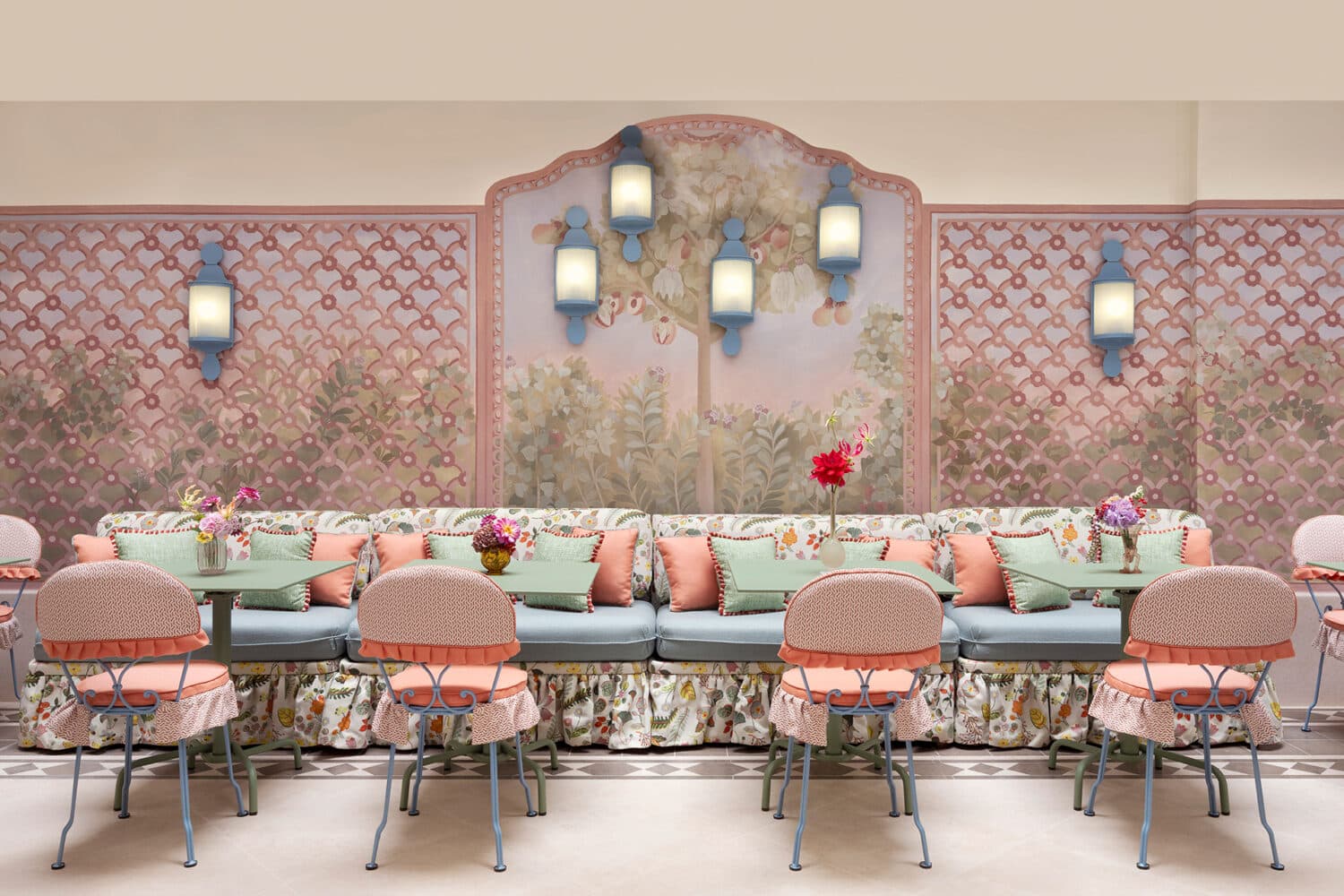
Le Grand Mazarin at 17 Rue de la Verrerie is the design-forward way to do it. Martin Brudnizki pushed the interiors into a deliberate maximalism, Boubale is a real restaurant instead of a hotel afterthought, and the 8-meter pool matters because central-Marais pools are still genuinely rare. The appeal is immediate: first-timers walk in and know exactly where they are.
The limitation is just as immediate. Street-facing rooms in this part of the 4th will remind you what weekends sound like in a famous neighborhood. Ask for an interior room. It matters here more than almost anywhere else in the city.
Le Grand Mazarin is the right call if you want the canonical Marais image with a real design argument attached. It is the wrong call if you are a light sleeper, hate maximalist rooms, or really mean "I want the Marais, but calmer."
For food nearby, Boubale is your anchor, Chez Marianne is the practical lunch move, and the Marche des Enfants Rouges is still worth a morning whether you are sleeping in the 3rd or the 4th.
The 3rd is where you stay if you want the Marais but not that Marais. The galleries around Rue Beaubourg, the design shops that feel like taste rather than performance, and the morning rhythm around the Marche des Enfants Rouges all make the case more persuasively than a generic "stylish neighborhood" label ever could.
Experimental Marais at 116 Rue du Temple is the hotel answer here. It is an Experimental Group property, not an Aman, not a palace, and not trying to borrow prestige it did not earn. Tristan Auer's interiors are specific without becoming cold, Temple & Chapon gives the hotel an actual restaurant with weight, and the Roman-bath-and-hammam spa setup makes the wellness side feel complete rather than decorative.
The 2025 opening is either a feature or a caution flag. If you like first-season sharpness, it is attractive. If you need years of operating history before spending this much, it is still a newer bet than the established Paris names.
This is a repeat-visitor hotel, or a first-timer who has done their homework and knows they want the calmer version. With 43 rooms and one suite, it books like a real boutique. Do not expect it to save you on short notice in peak season.
The other thing most guides still fail to say clearly: the Centre Pompidou is closed until 2030. If the Marais was on your list partly because of a lazy rainy-day museum fallback, build a new plan now. Musee d'Orsay is the strongest substitute. Sainte-Chapelle carries the stained-glass argument. The Musee Picasso is still walkable from both sides of the Marais and still open.
Starting in the early 2010s, a generation of chefs trained in more formal kitchens started opening restaurants in the 10th and 11th because the rents were lower and the old fine-dining circuitry was somewhere else. What grew out of that shift is the most compelling food-first neighborhood logic in Paris now.
Le Servan at 32 Rue Saint-Maur is one of the clearest expressions of that shift: Michelin-selected, run by the Levha sisters, closed on Sundays, and worth booking one to two weeks ahead if it is a must-do for you. Clamato at 80 Rue de Charonne is the seafood-forward sister to Septime and still behaves like a timing problem more than a standard reservation because it is walk-in only. If you want lunch there, arriving before 12:30 is the grown-up move, not the obsessive one. Bistro Paul Bert at 18 Rue Paul Bert gives the neighborhood an old-school bistro counterweight, but it is not casual to land on peak dates. In fall and spring, it can be a three- to four-week reservation. Cafe du Coin at 9 Rue Camille Desmoulins is the useful late-night counterexample to all of that planning: neighborhood energy, natural wine, and one of the easier places to keep the night going. Septime remains shorthand for why international dining attention moved east, but it should stay in the background here. The reader does not need a history lecture. The reader needs to know that the 11th still solves dinner better than the postcard districts do. Du Pain et des Idees in the 10th is the morning argument for the area all by itself.
The hotel answer is 9Hotel Republique. The logic is not really about the hotel. It is about the map. Le Servan is walkable. Clamato is a short metro or taxi instead of a cross-town operation. Bistro Paul Bert is nearby. Cafe du Coin works when dinner turns into one more stop. Du Pain et des Idees is close enough to become a morning habit. No hotel in the Marais, Saint-Germain, or the 1st can honestly make the same promise.
The hotel itself is 48 rooms, mid-century in tone, with a self-service wine bar and rate logic that stays sane. The money you do not spend on address premium here goes directly into dinner, which is exactly the right trade for this kind of trip. It is also the neighborhood that suffers most in August. If your whole argument for staying here is Le Servan, Clamato, Paul Bert, and the rest of the 10th/11th dining spine, you need to check who is actually open before you lock the room.
The warning is noise. Republique and the surrounding streets stay active. This is not a polished, postcard neighborhood. It is a living one. If that sounds like a problem, look at the 2nd or the 7th instead. If it sounds like Paris, you are probably in the right place.
If the Marais is where first-timers default and the 10th and 11th are where food travelers graduate to, the 2nd is where the practical answer lives for everyone in between. Eight minutes to the Marais on foot, about twelve to the Louvre, five to the Grands Boulevards, and usually less money than the equivalent stay in the 4th or Saint-Germain.
Rue Montorgueil is the street that explains the neighborhood best. In the morning it still behaves like a working market corridor with actual regulars and actual errands. The Sentier district next door has spent the better part of a decade turning into a creative-industry pocket, which is why the cafe culture feels specific instead of generic.
Bouillon Chartier, technically in the 9th, is still worth naming because it gives nervous first-timers a real value anchor. The room is intact, the prices stay sane by Paris standards, and nobody is pretending it needs reinvention.
Hotel Hana at 17 Rue du 4 Septembre is the pick for most trips. Laura Gonzalez and Olivier Leone's Japanese-Parisian concept gives it real personality without tipping into theme, and the 26-room scale keeps it feeling chosen rather than efficient.
What makes it work is geographic, not theatrical. Right Bank dinners in the 2nd, 3rd, and 10th are easy from here. Louvre and Palais Royal days are simple. You are not paying for a famous address. You are paying for a useful one.
The small inventory is the catch. Strong dates in April, May, September, and October disappear fast. If Hana is gone by the time you look, The Hoxton Paris is the fallback in the same arrondissement.
This is the answer for travelers who want Paris to feel easy instead of performative. If you need nightlife at the curb or a grand-lobby sense of occasion, it will feel too understated. For almost everyone else, that restraint is the whole point.
The Hoxton Paris opened in 2017 inside a genuine 18th-century hotel particulier on Rue du Sentier. The courtyard is lovely, the shell gives the brand more physical substance than most of its properties, and 172 rooms means it can still save a trip when the smaller boutiques are already gone.
The trade is scale. This is a social hotel at real size. It is useful, dependable, and sometimes exactly what a friend trip or later-booked weekend needs. It is not intimate. It is not especially romantic. It is just one of the better practical answers in central Paris when availability or budget have already narrowed the options.
Saint-Germain has been over-sold for a century and still lands when you buy it on purpose. The streets around Boulevard Saint-Germain and the Jardin du Luxembourg are beautiful, the Musee d'Orsay is close, and the neighborhood works for travelers who want bookshops, galleries, and a Left Bank rhythm more than they want to optimize every dinner.
The correction is just that the mythology is expensive. Les Deux Magots still charges for the photo. Many of the main-square brasseries are paying rent on legend. The side streets matter more, and the honest dinner logic is simple: use the hotel or the neighborhood for one easy night, then cross town when food is the actual event.
Mandarin Oriental Lutetia on Boulevard Raspail is the Left Bank statement. The 1910 building carries real history, Brasserie Lutetia gives you a dining room that belongs at the address, Bar Josephine and Bar Aristide keep the public spaces alive, and the Akasha Spa's 17-meter pool makes the hotel feel like a full operation rather than a sleeping arrangement with history attached.
At 184 rooms and suites, this is palace scale, not boutique scale. The upside is availability and institutional polish. The downside is that intimacy is not really the product. Stay here if you are buying Saint-Germain on purpose and want the whole Left Bank image delivered at luxury size. Do not stay here if Le Servan and Clamato are the nightly plan, because that commute starts to eat the trip.
Boulevard-facing rooms carry real traffic noise. Ask for courtyard-facing if sleep matters.
The 7th is where Paris gets quieter without getting boring, and Rue Cler is the street that makes the argument. It is a real market corridor, the neighborhood bistros actually serve the people living there, and the whole area feels calmer in a way that starts making sense once you have done noisier versions of Paris before. This is not the Eiffel Tower queue version of the 7th. It is the version where mornings are easier, the sidewalks are wider, and the trip starts to feel less like crowd management.
The tradeoff is after dark. The neighborhood folds earlier than the Marais or the 10th. If the trip is built around late dinners and then one more drink, the return matters. Count on a deliberate cross-town dinner run if your nightly plan lives in the 11th. That is why the 7th is not the default Paris answer. It is a specific one.
Sax Paris, LXR Hotels and Resorts, opened on April 4, 2025, at 55 Avenue de Saxe. It has 118 rooms and suites, a rooftop Kinugawa with Eiffel-facing views, a pool, and the sort of crispness new hotels get before the city rubs against them for a few years. The useful detail is not just that it is new. It is that the scale makes it bookable, the hardware is modern, and the 7th starts to feel deliberate instead of like a consolation prize for people who missed the Marais. It is also one of the few luxury options in this set where one dinner can happen at the hotel without the whole stay collapsing into hotel life.
This is strongest for couples with low noise tolerance, museum-heavy travelers who care more about the Rodin Museum, Invalides, and cleaner mornings than about being near the 11th at midnight, and repeat visitors who already did the louder Paris once. It also works better than people think for families and older travelers because Rue Cler is functional, not performative. You can buy breakfast, walk to the Rodin gardens, cut across to Invalides, and come home to a neighborhood that is still acting like a neighborhood. If you are deciding between Sax Paris and Hotel Hana, the tiebreaker is simple: Hana if walking radius and dinner access drive the trip, Sax if calmer streets, museum adjacency, and newer hotel hardware matter more.
As a very recent opening, Sax still has less accumulated operating signal than older Paris luxury hotels. The hardware is excellent. The long-term personality is still settling in. That is why this is not the universal first-trip answer. It is the answer for the reader who already knows that quieter mornings and a calmer home base matter more than winning the shortest possible ride to Charonne.
If the hotel needs to carry the whole trip, the 1st is where Paris puts that kind of hardware. It is not a neighborhood in any real daily-life sense. It is the Louvre, the Tuileries, Place Vendome, and addresses built to support the idea that the room itself is the destination.
Cheval Blanc Paris is the clean answer when the budget is truly open. Seventy-two rooms inside the restored La Samaritaine complex, Peter Marino interiors, Plenitude as the serious dining argument for staying rather than merely visiting, Langosteria as the useful second restaurant, and a Dior Spa with a 30-meter pool that is unusually serious by Paris city-hotel standards. If the hotel needs to carry the memory, this is the one.
Maison Barriere Vendome is the quieter 1st-arrondissement luxury move. It opened on January 9, 2025, with just 26 rooms, suites, and apartments, and each room is inspired by a significant woman in Parisian history. That sounds like the sort of thing that could turn gimmicky quickly, but here it actually shapes the rooms into distinct spaces rather than another anonymous luxury box near Place Vendome. Frida gives the property a restaurant and bar with a point of view. The small inventory is part of the appeal and part of the problem: if your dates are fixed and late, this is exactly the kind of hotel that disappears first.
The difference between these two 1st-arrondissement answers is simple. Cheval Blanc is public luxury executed at the highest level. Maison Barriere is private luxury, quieter and harder to land on peak dates. Both are strongest when the hotel itself is doing serious work for the trip. Neither is the smartest answer if dinner geography or neighborhood life matters more than hardware.
Noise. Paris is loud by default. Boulevard-facing rooms on Saint-Germain, Rue de Rivoli, and the major Marais streets carry traffic noise well past midnight, while the 10th and 11th add late terraces and weekend spillover. If sleep matters, ask for an interior room or a higher floor before you arrive. Do not wait to discover the problem at 1am.
Terrace smoking. Outdoor smoking is common and legal. If it bothers you, plan where you sit. The terrace culture is not going to adapt to your vacation.
Sunday and Monday closures. Le Servan closes Sundays. Many of the better neo-bistros close Sunday, Monday, or both. If the food map is the reason you booked the 10th or 11th, confirm the restaurant schedule before you confirm the hotel, not after.
August. Many neighborhood restaurants close for some or all of August. The 10th and 11th feel this hardest because the bistros are the main reason to stay there. The Marais and Saint-Germain are easier to salvage because tourist infrastructure stays open.
Fashion Week. The late-winter and early-fall Fashion Week windows spike rates across the 1st, 2nd, 3rd, 4th, and 6th. Small hotels that usually feel bookable stop feeling bookable, and restaurant reservations tighten at the same time. If you want the best restaurant season without the worst booking pressure, aim for early October after the September shows or late March once the late-winter squeeze has passed.
Pompidou. The Centre Pompidou is closed until 2030. If the Marais was partly on your list for a rainy-day museum, you need another plan.
Dinner logistics. Saint-Germain and the 7th look central on paper. They are central to geography, not to the 10th and 11th restaurant spine. The commute from the Left Bank or Rue Cler to Le Servan or Clamato is real, especially on a short trip, and it feels longer on the way back than on the way there.
Pickpockets. Gare du Nord, the RER B airport corridor, and metro lines 1, 4, 6, and 9 deserve more vigilance than the glossy guides admit. Add Sacre-Coeur approaches, Louvre-area crowd pockets, and Eiffel Tower queues to the list. Bag in front, phone out of your back pocket, and normal big-city awareness solve most of it. This is a vigilance problem, not a fear problem.
Tipping. Service is included. Round up modestly if you want to show appreciation. Do not import American 20 percent reflexes and assume they map cleanly. EUR 2 to EUR 5 reads as gracious. A giant U.S.-style tip mostly reads as confusion.
Reservation mechanics. Paris still runs on phone-only bookings, odd release windows, and walk-in-only systems. Clamato is walk-in only. Le Servan handles its own reservations. Lunch is still the value move in the city.
Strikes. Transport strikes happen and usually come with notice, often around 48 hours. They are an inconvenience, not a reason to cancel. The metro and trains are what get hit. Restaurants almost never strike in the way travelers imagine. Check the news around arrival day, screenshot your hotel address, and have a rideshare backup for airport day.
Easiest strong yes? Hotel Hana, 2nd arrondissement.
Dinner is running the trip? 9Hotel Republique, 10th arrondissement.
Budget is wide open and the hotel needs to carry the memory? Cheval Blanc Paris, 1st arrondissement.
The Marais, but the calmer version with better breathing room? Experimental Marais, 3rd arrondissement.
The Marais, full-strength, with a better restaurant and a pool? Le Grand Mazarin, 4th arrondissement.
Left Bank on purpose, with history and scale? Mandarin Oriental Lutetia, 6th arrondissement.
Quieter mornings, newer luxury hardware, Eiffel views? Sax Paris, 7th arrondissement.
Private, small-scale luxury near Place Vendome? Maison Barriere Vendome, 1st arrondissement.
Reliable, central, and easier for groups or later booking? The Hoxton Paris, 2nd arrondissement.
If you have read this far and still have two good answers, that is when the picker is useful. Tell it your dates, your budget, and what the trip is really about, and it will give you one answer instead of another list.
Mistakes to avoid
The 8th looks convenient, then makes the whole trip feel expensive and oddly generic. You pay luxury-zone pricing for chain energy and wind up commuting to the neighborhoods where Paris actually feels alive.
The 3rd and 4th solve different trips. One is calmer and sharper. The other is prettier and more tourist-saturated. If you flatten them into one "stay in the Marais" answer, you erase the tradeoff that matters most.
Paris can punish lazy restaurant planning faster than hotel planning. The right neighborhood helps, but it does not rescue you if the places you came for are closed when you land.
Still deciding?
Paris is already baked in. What matters now is whether you want restaurant gravity, calmer sleep, better value, or a hotel that can carry the whole mood by itself.
What to tell us
Budget ceiling.
Quiet sleep or more scene.
Restaurant-first or hotel-first.
We will give you one hotel and explain why.
Hotel picks
Start with the strongest answer, then only move sideways if the tradeoff is real.
9 real options, not a padded list. Sweet spot: EUR200-500/night.
Featured pick
$$$ · €200–350
Quiet, design-forward sleeper in the 2nd
Why the base works: The practical Right Bank answer: central, smart, walkable, and less performative than the Marais.
Honest take
Scale
26 rooms
Era
opened 2024, Japanese-Parisian design concept
Use this when
design-aware travelers, quiet central stays
Why it stands out
If you later book through one of our hotel links, we may earn a commission.
Best-value food-first base for the 10th/11th dinner map
Neighborhood edge: The food-first answer. Not the whole city, but the best way to explain how modern Paris eats.
Skip this if: The area can get noisy on weekends, and this is not the place to fake a quiet Paris fantasy
Best for: food travelers, repeat visitors, budget-aware couples
Top-end insider luxury with serious dining and spa hardware
Neighborhood edge: This is not a neighborhood lifestyle recommendation so much as a luxury-base decision. Use it when the traveler is buying top-end hotel hardware first and city texture second.
Skip this if: The price ceiling removes it from any normal decision set fast
Best for: milestone luxury, food-first splurges, design-conscious couples
Marais design statement with a real restaurant and rare pool
Neighborhood edge: This is the clearest first-timer lesson: the 3rd feels sharper and calmer, while the 4th pays a tourism tax for beauty.
Skip this if: The address is beautiful but it absolutely pays the 4th-arrondissement tourism tax
Best for: design-aware first-timers, Marais lovers, style-forward couples
Also worth considering
These are still real recommendations. They just solve narrower problems than the lead picks above.

Sharper, newer Marais design play under Experimental Group
Use this when: design editors, repeat Marais visitors, new-hotel seekers
Tradeoff: It is still a newer property, so the long-term operating signal is thinner than older peers
If you later book through one of our hotel links, we may earn a commission.
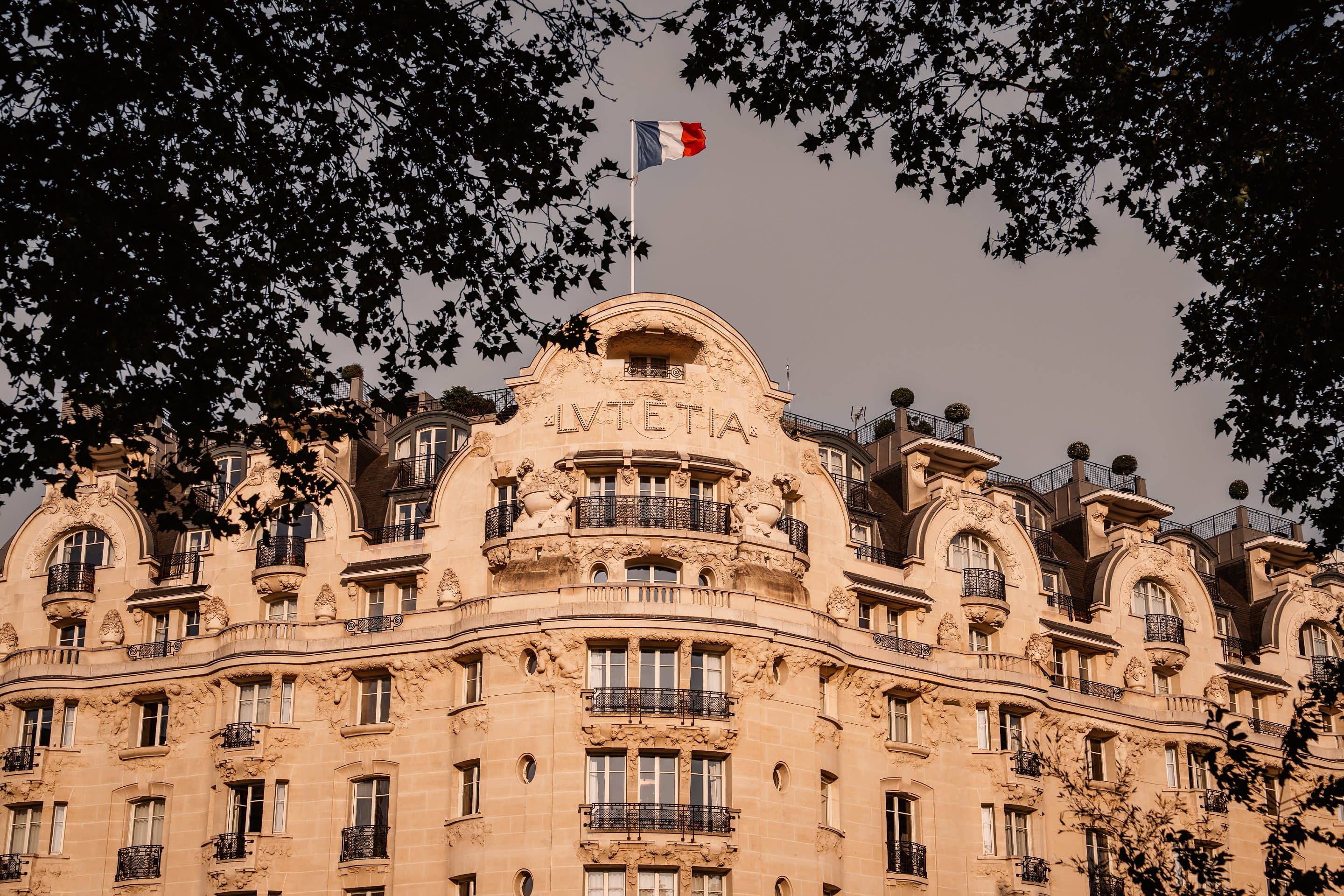
Left Bank palace for travelers buying the classic Paris image on purpose
Use this when: postcard Paris travelers, Left Bank loyalists, classic luxury buyers
Tradeoff: At 184 rooms, this is a real palace-hotel machine, not a hushed boutique escape
If you later book through one of our hotel links, we may earn a commission.
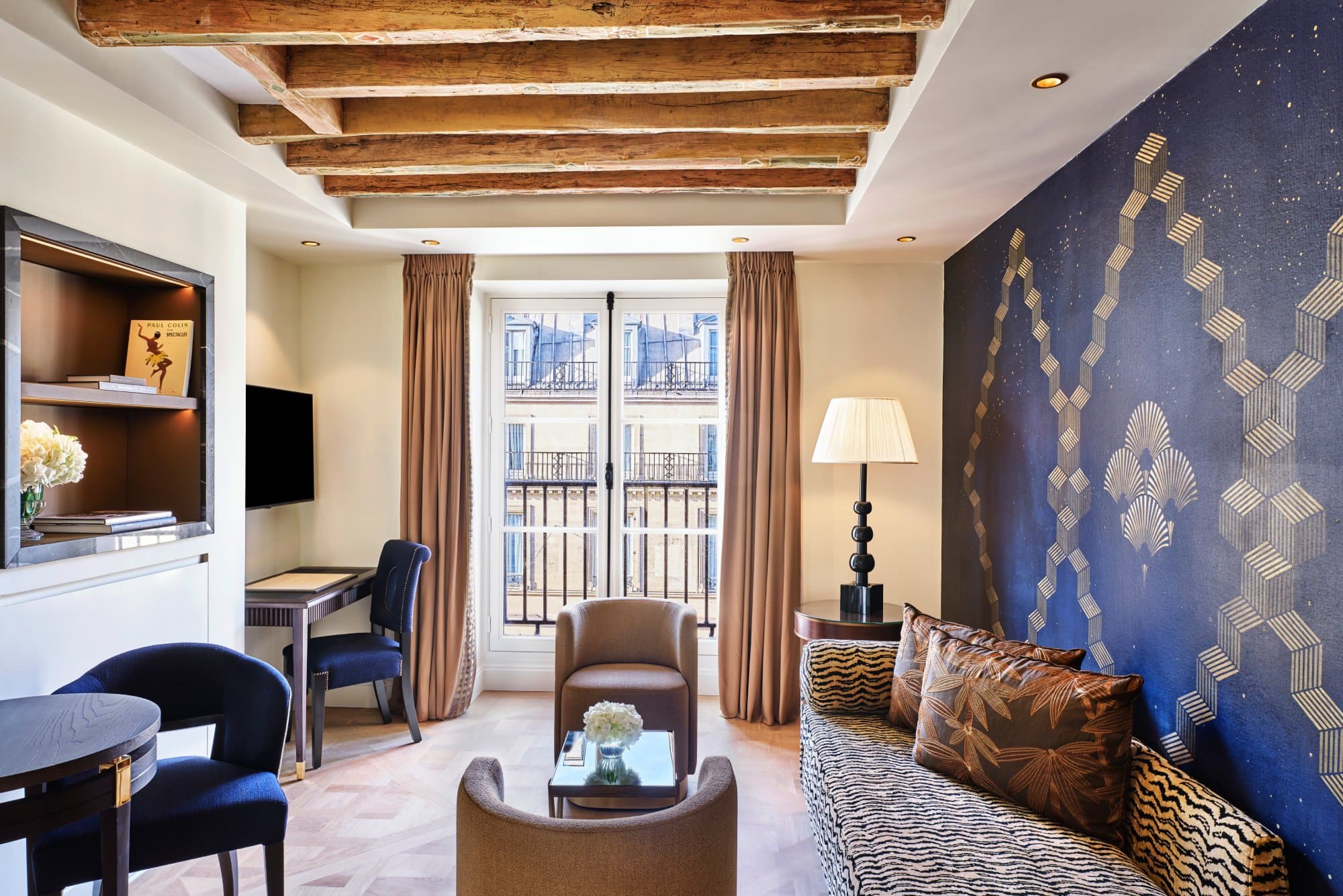
Whisper-luxury Place Vendome option with very limited inventory
Use this when: anniversaries, quiet luxury seekers, art-forward splurges
Tradeoff: Twenty-six keys means availability behaves like a boutique constraint, not a dependable option
If you later book through one of our hotel links, we may earn a commission.
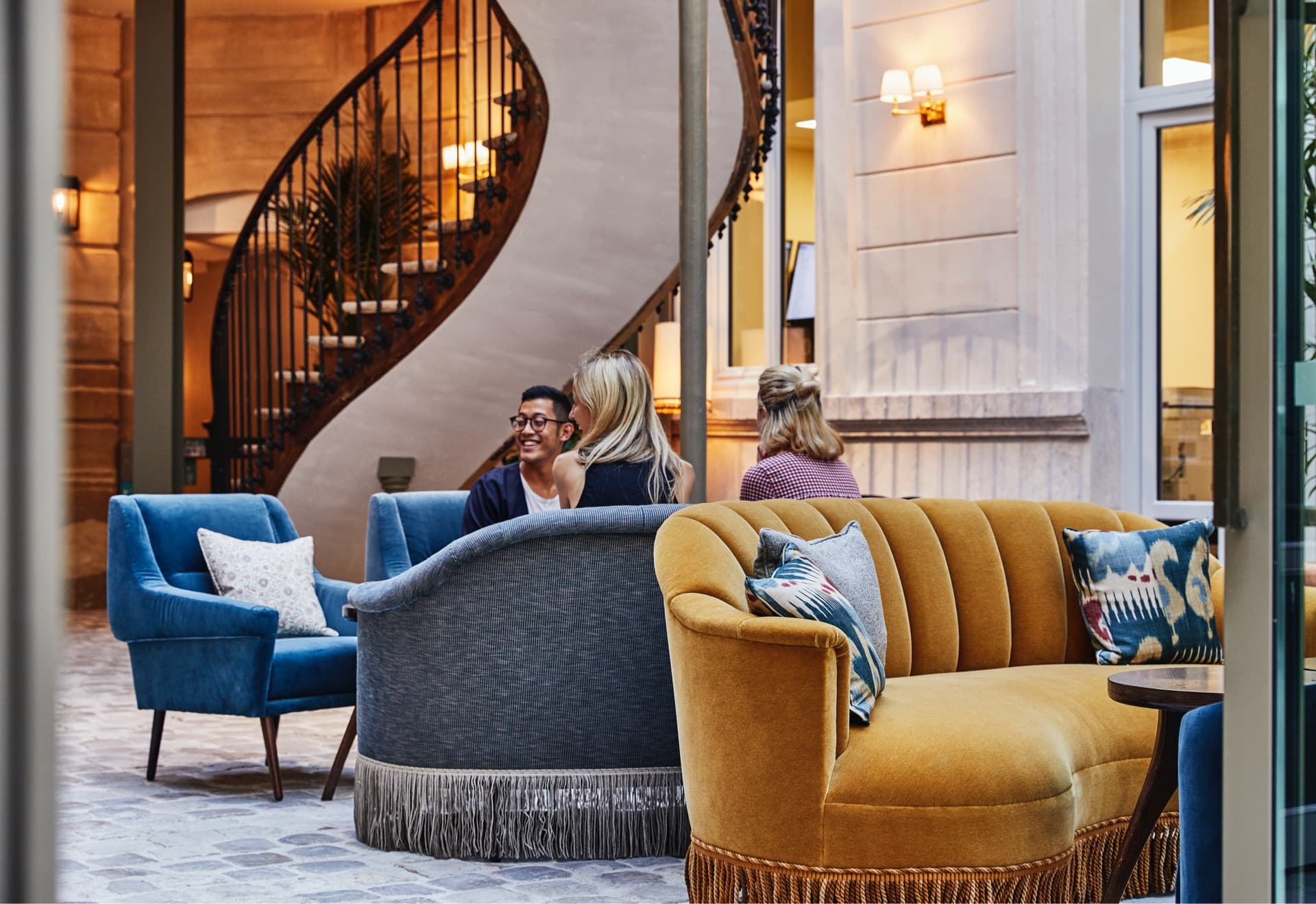
Practical Sentier option when you want scale, reliability, and centrality
Use this when: practical first-timers, friend trips, travelers who want social energy
Tradeoff: At 172 rooms, it is a social hotel first and an intimate boutique never
If you later book through one of our hotel links, we may earn a commission.
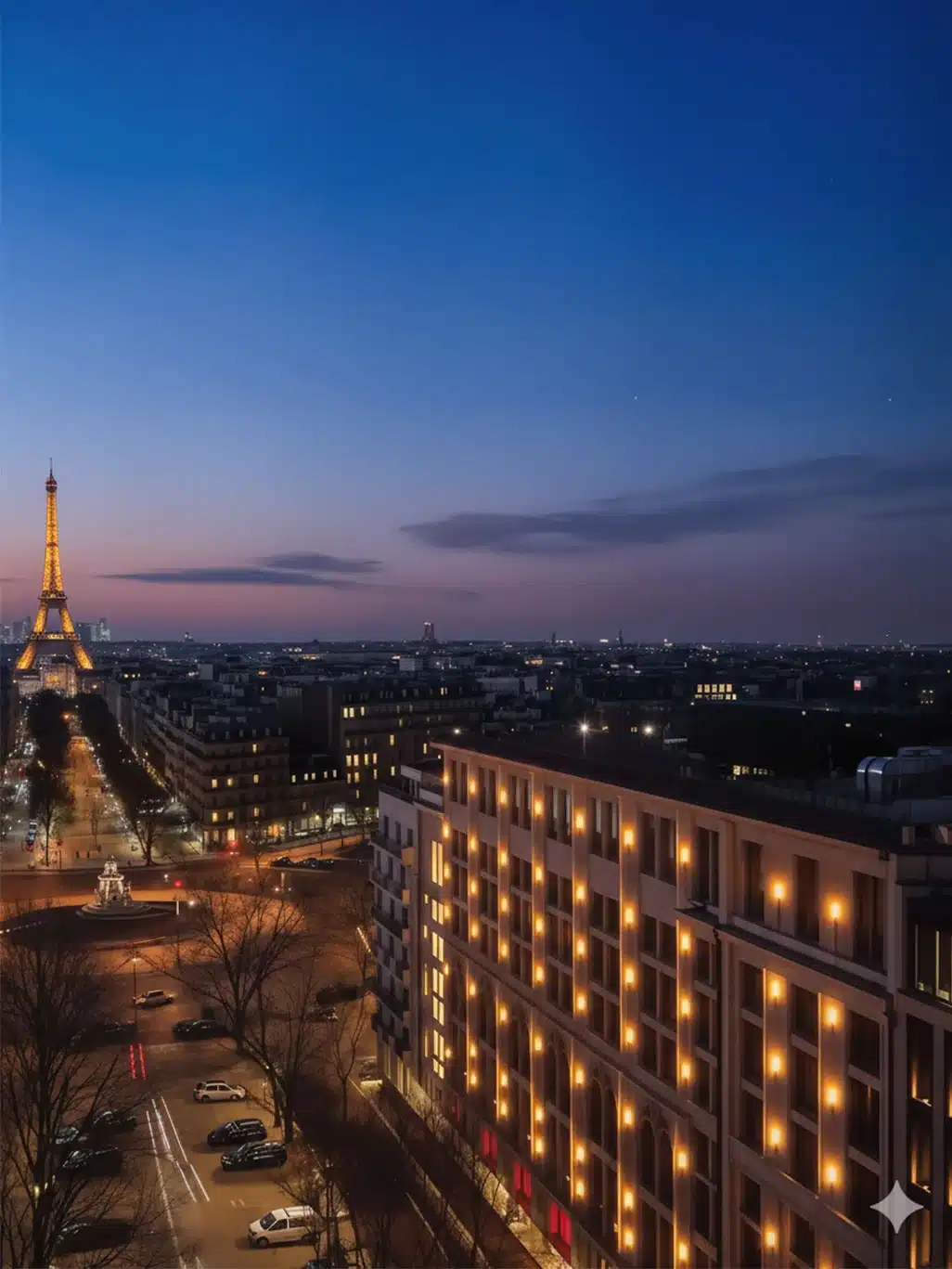
Newer 7th-arr luxury anchor for a quieter Paris base
Use this when: quiet luxury, Eiffel-area stays, couples wanting a newer 7th-arr option
Tradeoff: This part of the 7th gets quiet fast after dinner, which is either the point or the thing that makes the trip feel overmanaged
If you later book through one of our hotel links, we may earn a commission.
FAQ
Book Hotel Hana in the 2nd. The location makes everything accessible without requiring you to have a theory about the city first. If Hana is sold out, The Hoxton Paris is the same neighborhood at a bigger, easier-to-book scale.
Yes. The 2nd keeps dinners in the 2nd, 3rd, and 10th easy, even if it is not as deep inside the restaurant map as Republique. If dinner reservations are the whole point, 9Hotel Republique still makes the cleaner food-first base.
For smaller hotels like Hotel Hana, Experimental Marais, and Maison Barriere Vendome, use a two-to-three-month lead for April, May, September, and October. Bigger hotels give you more breathing room, but Paris still tightens quickly during Fashion Week and strong fall weekends.
For restaurant access, usually yes. For atmosphere and museum proximity, only if that's not what you came for. If the trip is really about the Musee d'Orsay, the Jardin du Luxembourg, and the Left Bank image, Saint-Germain can still be worth paying for.
No. Metro, rideshare, and walking handle the city better than a car does, and parking becomes an expensive problem fast.
It is crowded, noisy on weekends, and you pay a premium for the address. It is also still the Marais. If you know that's the trade and want the classic version, Le Grand Mazarin is the best way to do it. If crowds bother you, book the 3rd instead.
The 7th around Rue Cler is genuinely residential and calmer than most first-timers expect. Sax Paris is the modern luxury answer there if you want Rodin, Invalides, easier mornings, and lower noise. Just know the neighborhood folds earlier at night, so the peace is either the point or the limitation.
Yes, at least a little. The Marais still works for walkability, galleries, the Musee Picasso, and street life, but the old lazy rainy-day backup is gone. Do not book the Marais because you think Centre Pompidou is waiting there. It is closed until 2030.
August if restaurants matter most, because closures hit the 10th and 11th hardest. Fashion Week windows are the other headache: rates spike, small hotels disappear, and reservations get harder right when you want the city to feel easy.
No. We still treat it as a watchlist item, not a live recommendation, because there is no stable public booking path we trust enough to present as real inventory.
Still deciding?
If you already know which hotel fits, book it. If you still have two good options and want us to break the tie, this is the faster move.
Last reviewed March 2026. We may earn a commission if you book through one of our hotel links.